23.07.2026
Choosing the Right Range Hood Starts with Understanding Performance
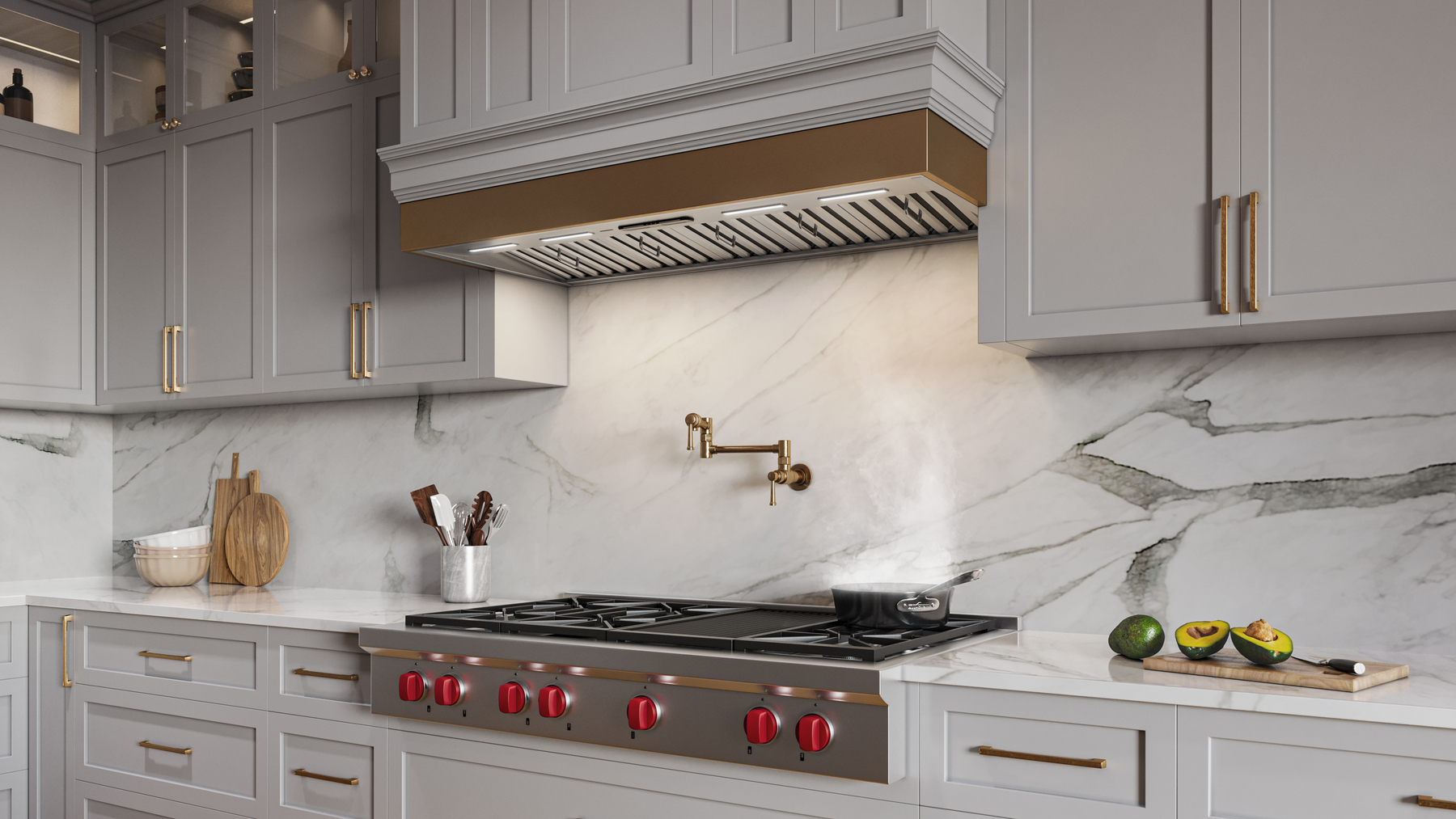
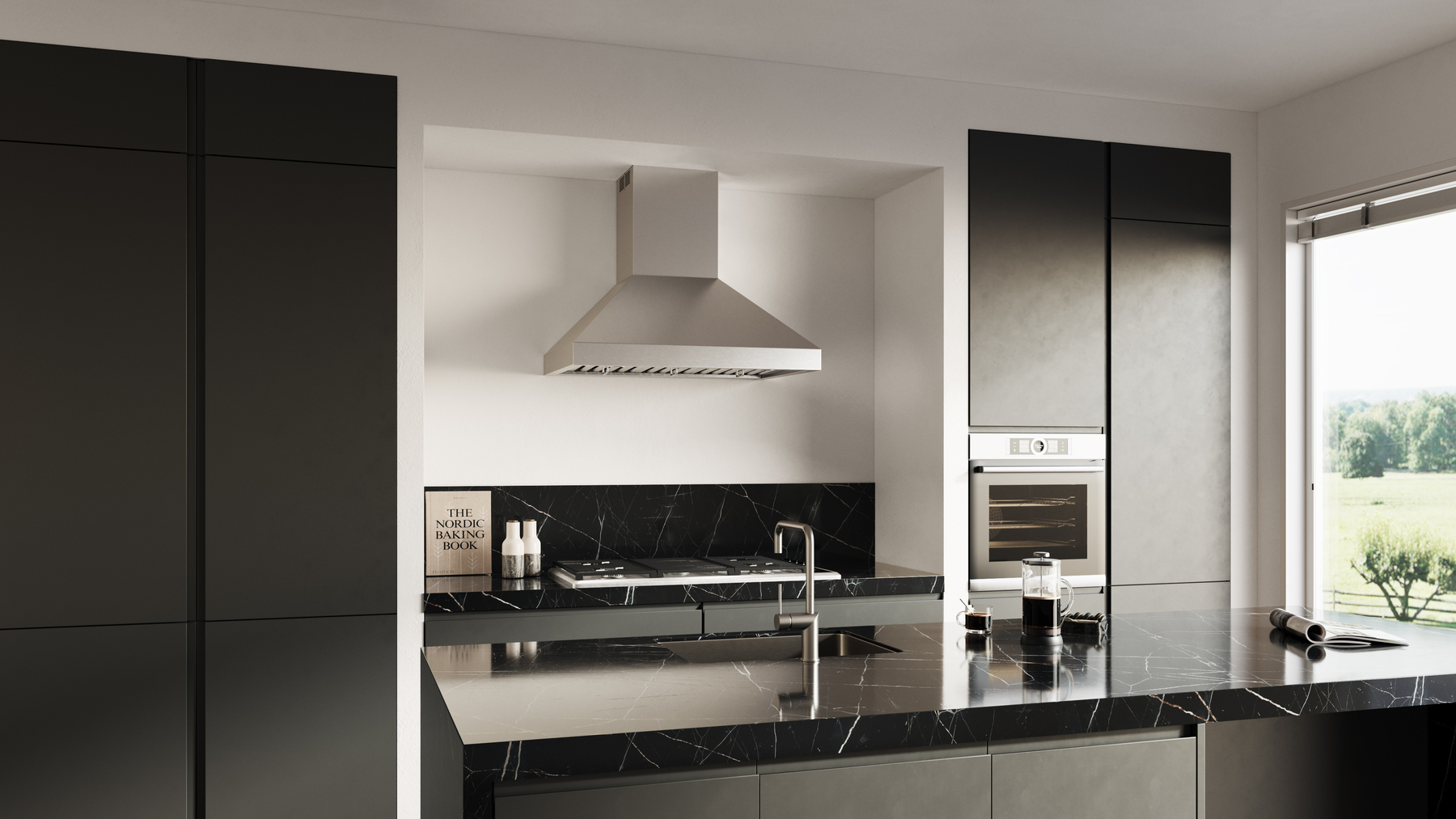
Designing a high-performing kitchen starts with more than selecting appliances and finishes. One of the most important and often overlooked decisions is ventilation. The right range hood helps remove smoke, grease, moisture, heat, and cooking odors while creating a cleaner, quieter cooking environment.
One of the most overlooked decisions during kitchen planning is ventilation. Yet it has a significant impact on indoor air quality, cooking comfort, appliance performance, and even how enjoyable your kitchen feels to use every day.
Whether you're designing a new kitchen, renovating an existing space, or selecting a premium range hood for a high-end cooking appliance, understanding the fundamentals of ventilation will help you make a more informed decision.
Why Should Ventilation Be Considered Before Designing a Kitchen?
Ventilation should be one of the first considerations during kitchen design, not the last.
Planning ventilation early simplifies duct installation, allows for shorter and more efficient duct runs, and gives you greater flexibility when selecting the right hood for your space.
An effective ventilation system exhausts cooking contaminants outdoors, including:
- Smoke
- Grease particles
- Heat
- Cooking odors
- Moisture
- Airborne pollutants generated during cooking
While recirculating range hoods can capture some grease particles using filters, they do not remove moisture, heat, or cooking byproducts from the home because the air is returned back into the kitchen.
For homeowners seeking the highest level of performance, exterior ducted ventilation remains the preferred solution.
Why Do Crosscurrents Affect Range Hood Performance?
Even the most powerful range hood can lose effectiveness if air movement in the kitchen is working against it.
These unwanted air movements, known as crosscurrents, can pull smoke and steam away from the hood before they are captured.
Common sources include:
- Open windows
- Patio doors
- Ceiling fans
- HVAC supply registers
- Garage entry doors
- Strong indoor air movement
Whenever possible, kitchen layouts should be planned so these air currents do not move directly across the cooking surface.
A well-designed hood with strong capture capability also helps reduce the effects of crosscurrents by containing smoke and heat until they can be exhausted outdoors.
Why Is Proper Ductwork So Important?
The performance of a premium range hood depends just as much on the duct system as on the hood itself.
Even the highest-performance blower cannot reach its full potential if airflow is restricted.
When planning ductwork:
- Choose the shortest possible duct route.
- Use the fewest turns possible.
- Select the largest duct size your installation allows.
- Never reduce the duct size below the hood's outlet size.
- Consider whether your hood offers top or rear duct connections to simplify installation.
Larger ducts reduce airflow resistance, allowing the blower to move air more efficiently while operating at lower sound levels.
Smaller ducts increase static pressure, reduce airflow, and typically make the hood louder.
What Are the Best Practices for Range Hood Ducting?
To achieve maximum airflow with the lowest possible sound levels, follow these ventilation guidelines:
- Never reduce the duct size below the size specified by the range hood.
- Larger ductwork generally delivers better performance.
- Keep total duct length under 50 linear feet whenever possible.
- Minimize elbows and transitions (ideally four or fewer).
- Separate 90-degree elbows by at least two feet of straight duct.
- Position transitions at least one foot from the hood outlet or remote blower inlet.
- When using a remote exterior blower, including one 90-degree elbow can help reduce noise transmission into the kitchen.
Careful duct planning helps preserve airflow while allowing premium ventilation systems to operate more quietly.
How Much CFM Does Your Range Hood Need?
Choosing the correct airflow begins with understanding your cooking equipment.
Conventional cooktops (under 60,000 BTU)
A good starting point is:
100 CFM for every foot of cooktop width
For example:
- 30-inch cooktop → approximately 250 CFM
- 36-inch cooktop → approximately 300 CFM
- 48-inch cooktop → approximately 400 CFM
Always follow your appliance manufacturer's recommendations when they differ.
High-performance cooktops (over 60,000 BTU)
For professional-style cooking appliances:
1 CFM for every 100 BTU of cooking output
Example: 60,000 BTU cooktop → 600 CFM
If your cooktop includes a grill or griddle, add an additional 200 CFM.
Example:
- 60,000 BTU cooktop
- 600 CFM baseline
- +200 CFM for integrated grill
Recommended airflow: 800 CFM
Do Island Range Hoods Need More Airflow?
Yes.
Island installations typically require more airflow because there are no surrounding cabinets or walls to help contain rising smoke and cooking vapors.
As a starting point:
- Conventional island cooktops typically use 150 CFM per foot of cooktop width
- High-performance island installations generally require an additional 100 CFM beyond the standard calculation
Because smoke can disperse more easily in open spaces, island kitchens often benefit from both increased airflow and larger capture areas.
Is Higher CFM Always Better?
In many designer kitchens, selecting a higher-capacity range hood than your minimum requirement can actually improve the overall experience.
A higher-performance blower does not always need to run at maximum speed.
Instead, it can operate at lower everyday settings while still delivering excellent ventilation.
The result is:
- Lower sound levels
- Improved comfort
- Better long-term performance
- Greater flexibility for occasional high-heat cooking
With properly sized ductwork, operating at lower speeds can reduce perceived sound levels by as much as 50% compared to running a smaller blower at maximum power.
What Is Capture Capability?
Airflow (CFM) is only part of the equation.
A range hood must also be capable of capturing smoke before it escapes into the room.
The capture area generally corresponds to the outer perimeter of the hood.
Within that capture area is the sump: the recessed portion underneath the hood that temporarily contains rising heat, smoke, and grease until the blower exhausts them outdoors.
Think of the sump as a holding chamber that prevents cooking contaminants from spilling into the kitchen.
For optimal performance:
- Choose a hood with at least a 1-inch-deep sump whenever possible.
- High-performance cooking appliances benefit from larger sump designs.
- If a larger sump is not available, increasing CFM can help improve overall capture.
Effective capture design often has just as much influence on real-world performance as airflow ratings alone.
What Are Sones?
Sones measure how loud a ventilation system sounds to the human ear.
Unlike decibels, sones are designed to reflect how people actually perceive noise.
For comparison:
Sone Rating | Comparable Sound |
|---|---|
0.3 sones | Calm breathing (extremely quiet) |
1 sone | Quiet refrigerator |
4.0 sones | Normal conversation |
6-7 sones | Typical conventional range hood |
One of the most common reasons homeowners avoid using their range hood is excessive noise.
Premium ventilation systems are engineered to provide powerful airflow while maintaining quieter operation, making it more likely that homeowners will use their ventilation every time they cook.
Why Ventilation Design Matters
Exceptional kitchen ventilation is never defined by airflow alone.
The best-performing systems combine:
- Proper kitchen planning
- Efficient duct design
- Adequate airflow (CFM)
- Excellent capture capability
- Quiet operation
- High-quality engineering
When these elements work together, your range hood becomes more than another appliance: it becomes an essential part of a healthier, quieter, and more refined cooking environment.
Frequently Asked Questions
Is a ducted range hood better than a recirculating range hood?
Yes. Ducted range hoods exhaust smoke, grease, moisture, heat, odors, and cooking pollutants outside the home. Recirculating models filter some grease particles but return the air back into the kitchen, leaving moisture and many airborne contaminants indoors.
Can duct size affect range hood performance?
Absolutely. Reducing duct size restricts airflow, decreases ventilation performance, and often increases noise. Whenever possible, use the duct size recommended by the manufacturer or larger.
Why do island range hoods need more CFM?
Island cooktops are exposed on all sides, allowing smoke and steam to spread more easily. Because there are no surrounding cabinets to help contain airflow, island installations generally require higher CFM and larger capture areas.
Does more CFM make a range hood louder?
Not necessarily. A higher-capacity range hood can often run at lower fan speeds during everyday cooking, making it quieter than a smaller hood operating at maximum speed.
What is the most important factor when choosing a range hood?
There is no single factor. The best performance comes from selecting the correct hood size, adequate CFM, effective capture design, properly sized ductwork, and a ventilation system that matches your cooking style and appliance output.
Why should ventilation be planned before the kitchen layout?
Planning ventilation early allows for shorter duct runs, fewer bends, better airflow, easier installation, and more flexibility when choosing a premium range hood. Early planning also helps maximize both ventilation performance and kitchen design.